Bastnäs Sweden

INTRODUCTION

Bastnäs Property, Sweden
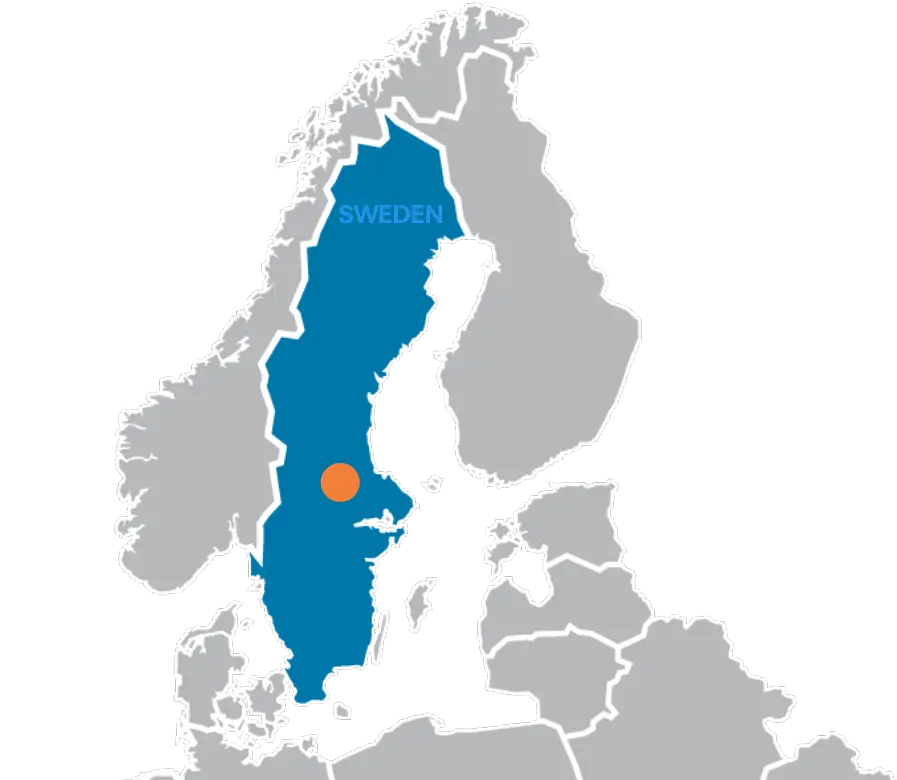
Why Sweden?

Ranked 6th on the Fraser Institute investment attractiveness index in 2024

Part of the Sustainable Critical Minerals Alliance committing to sustainable development and sourcing of critical minerals

Multiple new mine approvals in 2024 for copper deposits

Extremely low cost to stake exploration licenses at(C$3 / Hectare)

Swedish government adopted a proactive, high demand stance on mining aiming to position the country as a leading supplier of critical raw materials

Open source data through the geological survey

Lifted uranium ban 1st January 2026 allowing for investments in exploration

High level of geological competence and research

SUMMARY

Property size

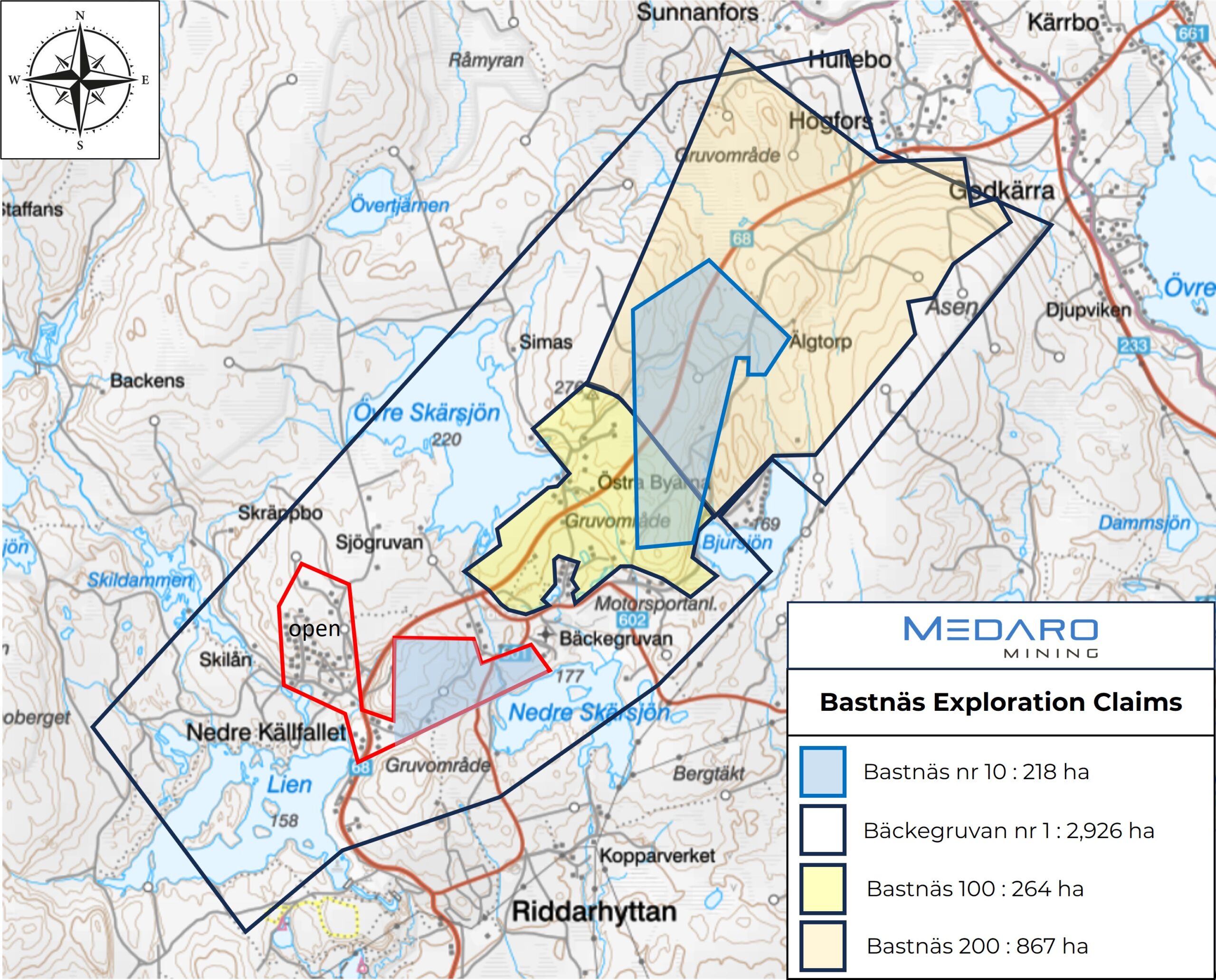
1,131 Hectares – 2,794 Acres

Stage

Developed Stage

Country

Sweden

TARGET

  • A 3km long, 10-20m thick zone of tectonically-controlled, remobilized massive sulphide lens.
  • Skarn-hosted magnetite-REE-mineralisation (Bastnäs-type) and associated BIF occurrences.

HISTORY

  • The Riddarhyttan-Bastnäs area is recognized for a long history of mining and mineral exploration which contains multiple historic mines and styles of mineralization.
  • The first production records for copper from the Riddarhyttan ore field were registered in 1633 and copper production continued through until 1873 where a combined total of 6,545t of copper were produced.
  • In addition to copper, iron ore, cobalt and REE were also historically mined from the Riddarhyttan-Bastnäs area including Ca. 160t of REE ore from the Nya Bastnäs deposit during the period 1860-1919. Cobalt was first discovered at Riddarhyttan in 1735 and the cerium-rich minerals were first recognised at Bastnäs in the 1750’s.
  • Previous exploration and development activity in the broader district has included combinations of historical workings, drilling, prospect-scale sampling, mapping, and geophysical investigation (including airborne geophysics in parts of the region).
  • The application of modern exploration techniques may assist in refining and prioritizing targets for copper, gold, massive sulfide-style base metals, and REE mineralization.
  • In 2019 a two-phase drill program was drilled at Bastnäs through a joint venture totaling C$7.61M between EMX Royalty Corp. and South32 – a total of 5,568m over 15 drill holes.

PAST EXPLORERS

Technical Information
The technical content of the website has been reviewed and approved by Amanda Scott BSc Geology, Faus(MM), an independent advisor to the Company and a Qualified Person (QP) under National Instrument 43-101 – Standards of Disclosure for Mineral Projects.

Svavelberget Sulphide Trend

PREVIOUS DRILLING

(Swipe table below to view)

Prospect Style of Mineralization HoleID From (m) To (m) Interval Length (m) Cu % Au g/t
Svavelberget remobilized massive sulphides RID-19-001 189.20 206.15 16.95 0.10 0.04
Svavelberget remobilized massive sulphides RID-19-002 99.15 132.85 33.70 0.01 0.08
Dammossen disseminated sulphides RID-19-005 135.00 165.50 30.50 0.18 0.01
Storgruvan disseminated sulphides RID-19-007 227.30 227.70 0.40 1.04 3.3
Old Bastnäs skarn RID-19-008 187.75 193.30 5.55 0.13 0.19
Ostergruvan magnetite-BIF RID-19-011 382.25 403.75 21.50 0.16 -
Ostergruvan magnetite-BIF RID-19-011 509.80 541.95 32.15 0.12 0.07

GEOLOGY

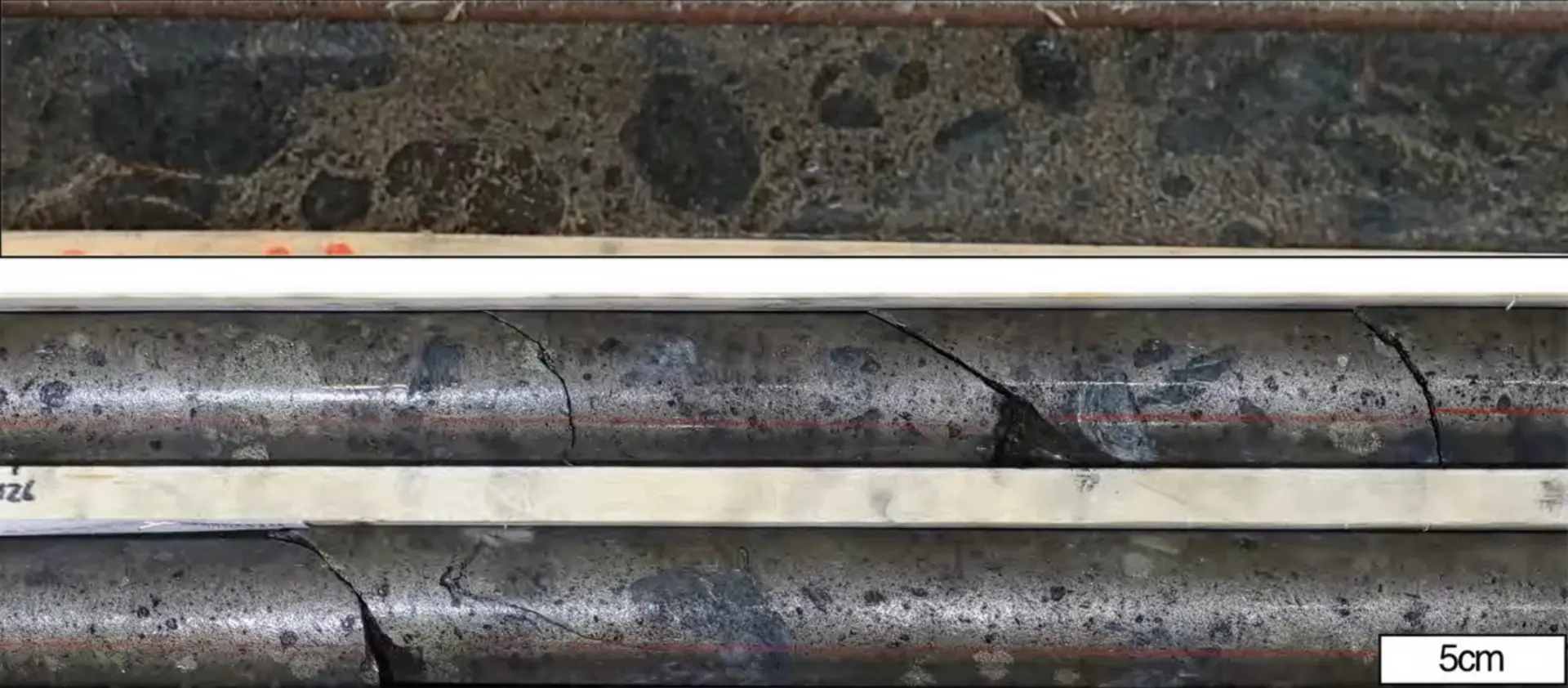
  • As indicated by EMX-South32 drilling a 3km long sulphide lens trends N-S through the Bastnäs project area. A 10-20m thick chaotic massive pyrrhotite dominated vein with altered wall rock. Formed by tectonic remobilization along a shear zone sub-parallel to stratigraphy. The location of the shear zone can be explained by the mechanically weak, intense Mg-alteration zone.
  • Anthophyllite altered rock is associated with remobilized massive sulphide dominated by Mg-Fe silicates with extreme low major elements Al, Ca, Na, K and immobile trace elements Ti and Zr.
  • Although copper grades are generally low in the remobilized massive sulphide a copper enrichment is noted towards the N-E when looking at historic drill holes.
  • Banded iron formations act as a host to mineralization.
Click image to enlarge

newsfilecorp.com   Source: Riddarhyttan technical report 2020
Rare Earth Opportunity

PREVIOUS DRILLING

(Swipe table below to view)

Prospect Style of Mineralization HoleID From (m) To (m) Interval Length (m) *TREO %
Lerklockan disseminated REEs in mgt-tremolite-skarn RID-19-013 268.60 289.00 20.40 0.97
Incl. 272.45 277.75 5.30 0.76
Incl. 281.20 288.20 7.00 1.65

HISTORY

  • Bastnasite was first discovered by Jöns Jakob Berzelius and Wilhelm Hisinger at the Bastnäs mine fields in 1803.
  • Between 1875 and 1885 approximately 4,500 tons of high quality cerium ore was mined at Bastnäs. Over 50 different types of minerals have been mined at Bastnäs with the dominant ore being iron ore.

LOGISTICS

  • Paved tar roads run through the project area, forestry road give access to local artisanal mine dumps.
  • Water and power are locally sourced with excellent infrastructure across this entire Bergslagen region of Sweden.
  • 2 hours by paved roads to Stockholm.

MODERN EXPLORATION

  • Phase 1 exploration program is expected to begin in spring/summer 2026.
  • A comprehensive assessment of rare earth enrichment of mine dump material and outcrop samples will be concluded in this phase 1 program.
  • Modern geophysics will be utilized to delineate new drill targets missed by previous operators.
Click image to enlarge

*TREO = Cerium, Dysprosium, Gadolinium, Lanthanum, Neodymium, Praseodymium, Samarium and Yttrium

pse-info.de – ekomuseum.se

Source: Riddarhyttan technical report 2020
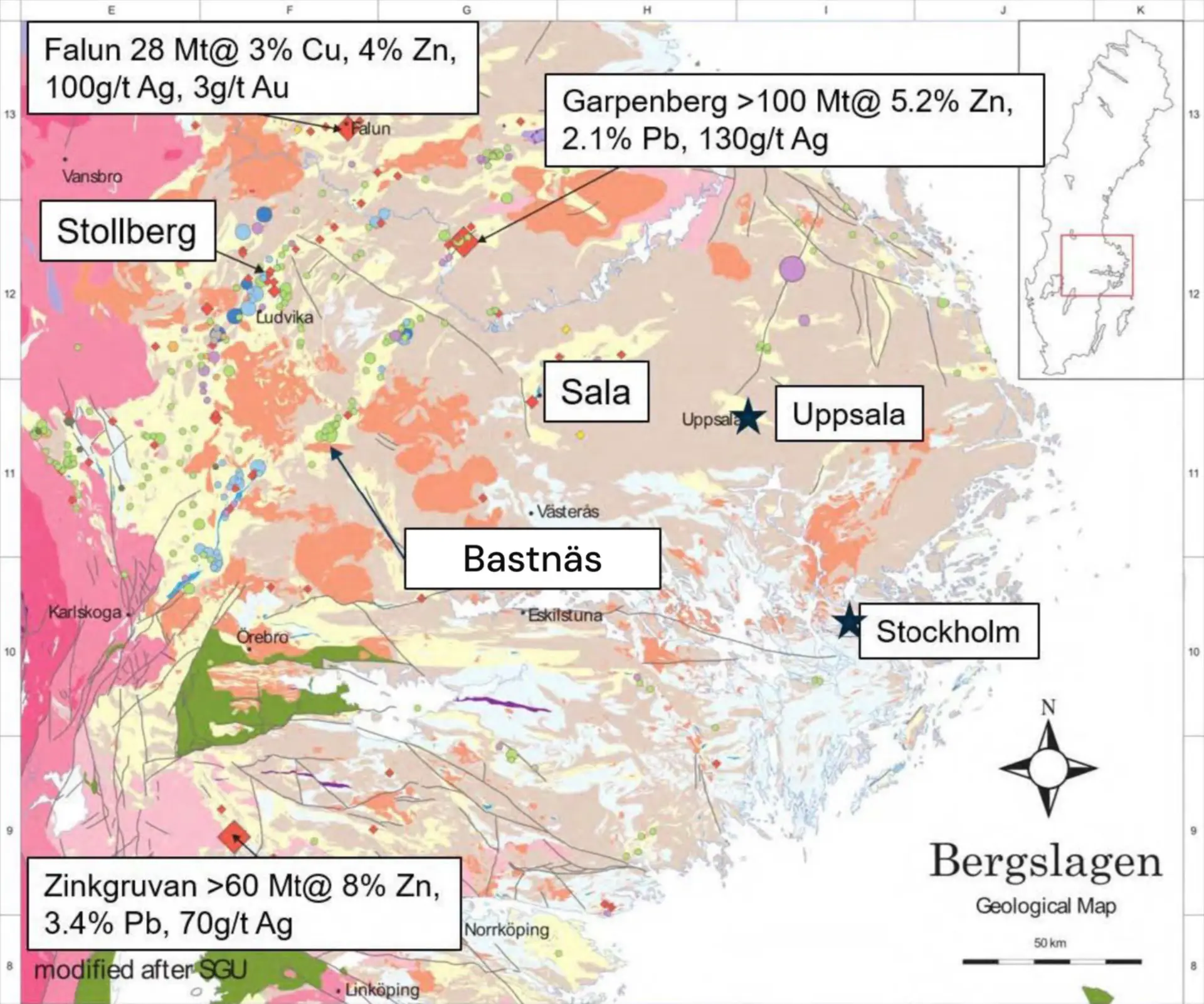
World Renowned Mining Region – Bergslagen Belt

  • Bergslagen is recognised for its strong mineral endowment. It is part of the geological structure known as the Fennoscandian Shield which covers most of Scandinavia. It is host to a large number of iron oxide and base metal sulphide deposits, some of which contain significant amounts of gold and silver.
  • These include both the Garpenberg mine and the Zinkgruvan mine (operated by Boliden AB).
  • The Bergslagen district in south-central Sweden is one of the world’s oldest mining districts.
  • Recent acquisition by Boliden of the Zinkgruvan mine operated by Lundin Mining
  • C$13M joint venture between Boliden and District Metals
  • A$9.8M joint venture between BHP and Ragnar Metals
Click image to enlarge

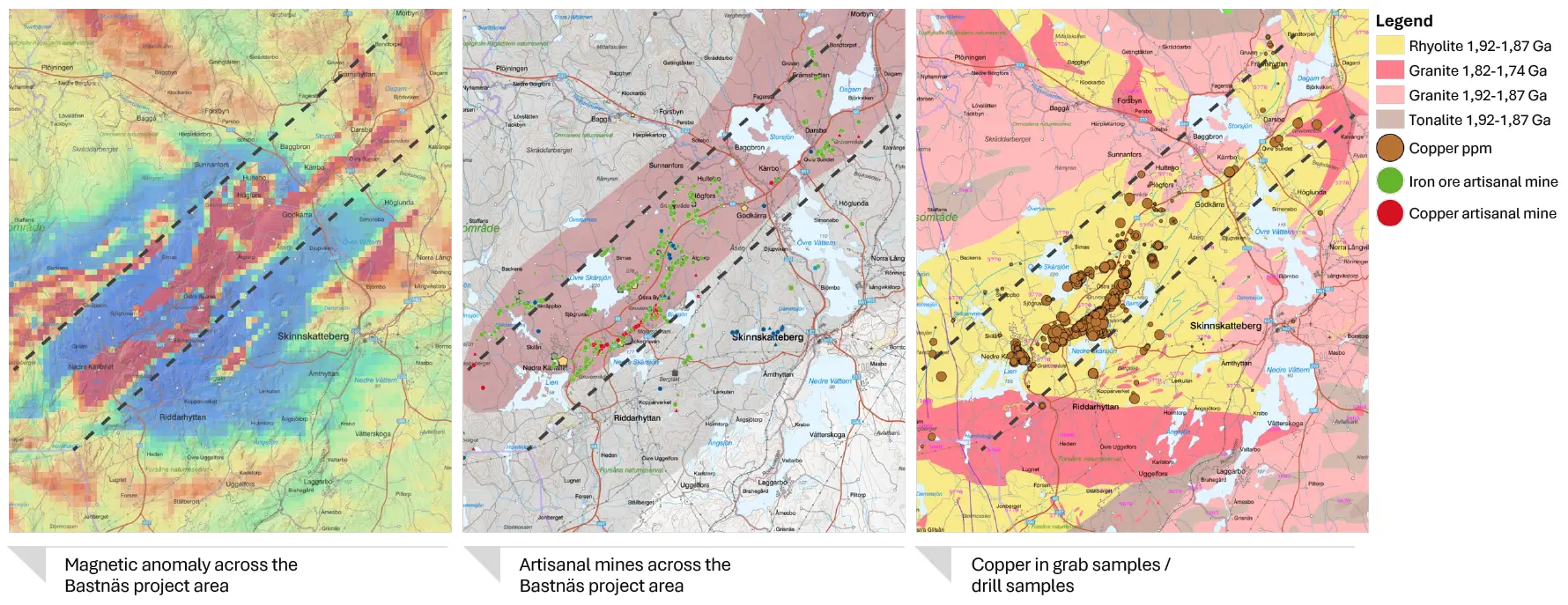
Structural Trend

Click image to enlarge

Source: Riddarhyttan technical report 2020  Source: SGU Kartvisare